When the Structure Disappears: Reintegration After Military Discharge
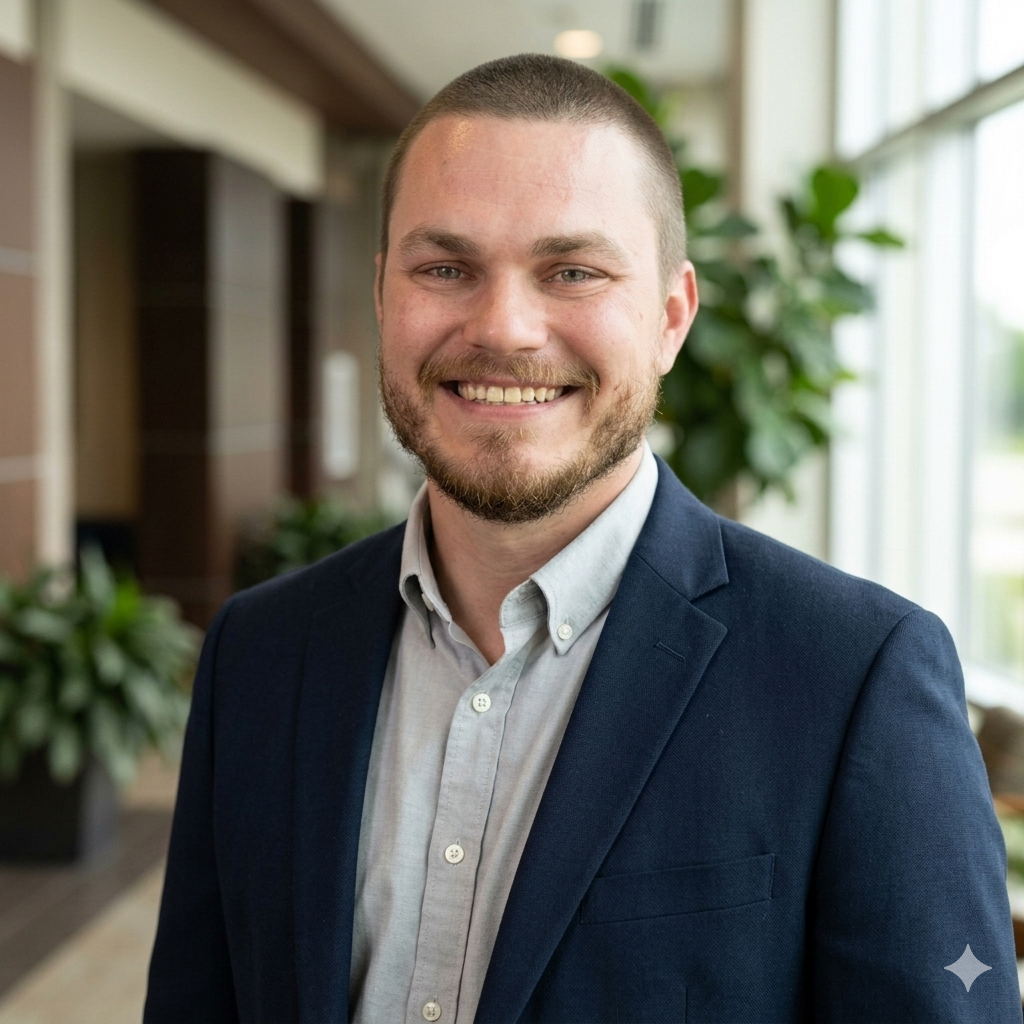
Kyle Schiebert http://www.bloomingtoncounselors.com
Getting out was supposed to feel like freedom.
Instead, for a while, it felt like standing in the middle of a wide-open field with no map, no formation, and no one telling me where to be next.
For many service members, discharge is described as a return to normal life. But that description often misses what reintegration actually feels like. Military life does not just provide a job. It provides structure, expectations, rhythm, identity, and a clear chain of responsibility. When that system falls away, what remains is not always immediate relief. Sometimes it is disorientation, grief, or freedom mixed with fear. For veterans entering civilian life, especially those who are neurodivergent or carrying the effects of trauma, that loss of structure can hit even harder. What looked restrictive from the outside may have functioned as stability on the inside. Predictability, for many people, is not a luxury. It is how they stay grounded.
When Structure Was Holding More Than the Schedule
One of the hardest parts of reintegration is realizing that military structure was doing more than organizing the day. For some service members, it was also helping organize the mind. Military life often provides a built-in rhythm: where to be, when to be there, what the expectations are, who is in charge, and what success or failure looks like. That predictability can be exhausting, but it can also be regulating. For individuals who are neurodivergent, such as those with ADHD, autism, or sensory-processing differences, clear routines and defined roles can reduce the mental burden of constant decision-making. For people living with trauma, structure can also act as a stabilizer. Knowing what comes next and functioning within a clearly defined system can reduce the chaos that trauma tends to amplify.
This does not mean military life was easy.
It means structure itself can become a coping mechanism.
For some veterans, the regimented nature of military life was not just tolerable. It was protective. It gave shape to time, reduced ambiguity, and provided an external framework that supported focus, emotional regulation, and day-to-day functioning. When discharge happens, the loss is not just about leaving a role. It is also about losing a system that may have quietly helped keep a person steady. That is why reintegration is not simply a career transition. For many veterans, it is also a nervous-system transition. Therapy can help veterans grieve the structure they lost, identify what parts of it were genuinely supportive, and begin rebuilding those pieces in civilian life in healthier, more flexible ways.
What Civilian Life Gives Back and Why That Can Feel So Heavy
If military life is often defined by structure, civilian life is often defined by agency. On paper, that can sound like a clear improvement: more freedom, more autonomy, more choice, and more room to decide what kind of life to build. And in many ways, it is. Civilian life can offer things military service often limits: the ability to choose where to live, what career path to pursue, how to spend time, what values to prioritize, and what kind of identity to inhabit outside of rank and command. For many veterans, that regained autonomy can be deeply meaningful. But agency is not always experienced as relief. Sometimes it lands like weight. The freedom to choose can quickly become the pressure to choose constantly. In civilian life, there is often no chain of command structuring the day, no uniform signaling who you are, and no institution dictating the next step. What initially looks like openness can become overload. Employment, finances, healthcare, housing, and relationships all become personal responsibility at once. This is part of what makes reintegration feel like such a double-edged sword. The veteran is no longer being told what to do at every turn, but that also means no one is automatically laying out the path ahead. One veteran captured this tension with a powerful question: Was I a soldier pretending to be a civilian, or a civilian pretending to be a soldier? That question gets to the center of reintegration. Discharge is not just a change in employment status. It can feel like a confrontation with identity. If the military shaped how a person related to authority, purpose, belonging, and self-worth, civilian life may not feel like returning to an older version of the self. It may feel like trying to find a place between two worlds. Therapy can help hold both truths at once: that civilian life may offer more agency, and that agency can still feel destabilizing. It can create space not only for the question, “What do I do now?” but also, “Who am I allowed to become now?”
The Cost of Agency and the Weight of Carrying It Alone.
When agency is handed back after discharge, it often comes with a sudden expansion of responsibility. Veterans are expected to manage finances, maintain employment, navigate relationships, keep appointments, make long-term plans, regulate stress, and adapt to civilian culture, often without the same level of structure or shared language they once had. That can be overwhelming, not because veterans are incapable, but because the demands have changed shape. In the military, responsibility exists inside a framework. In civilian life, responsibility becomes more diffuse. There may be no chain of command to clarify expectations, no unit culture reinforcing routine, and no mission brief explaining how to handle the thousand quiet decisions that make up adult civilian life. Veterans often know how to work hard, stay alert, and push through discomfort. The challenge is that civilian life requires a different style of functioning than military life trained them to use. This can show up in finances, where discipline and endurance do not always translate into budgeting, benefits navigation, or adapting to inconsistent income. It can show up in relationships, where military bonds built through shared intensity and loyalty can make civilian relationships feel ambiguous or disconnected. It can also show up in employment. Many veterans enter the workforce with resilience, discipline, and a mission-driven mindset, only to find themselves working for supervisors who do not understand how they think or communicate. Civilian jobs can feel vague, politically charged, or disconnected from a larger purpose. There can be a particular strain in being someone trained as a warrior and then trying to find meaning in a workplace like Walmart, where the stakes, culture, and identity demands are entirely different. That experience deserves validation, but not romanticizing. The challenge is real. It can feel alienating and discouraging. But naming the difficulty honestly is what makes growth possible.
A veteran is not weak for struggling in an environment they were never specifically trained to navigate.
They are adapting to a new theater. In therapy, validation does not mean encouraging someone to stay stuck. It means recognizing that their reactions make sense in context while also helping them build tools for the present. Veterans can learn civilian tools for financial management, relationship building, communication, stress regulation, and career development the same way they once learned to function under pressure in service. New environment. New mission. New toolkit. When the Workplace Speaks a Different Language One of the hardest parts of reintegration is realizing that civilian workplaces do not just operate differently from the military. They often speak a different language. Military communication is often shaped by clarity, urgency, hierarchy, and mission. Expectations may be demanding, but they are usually more explicit. Roles are more clearly defined. Accountability is more visible. Civilian workplaces, by contrast, can feel less direct. Expectations may be implied rather than stated, feedback may be softened or delayed, and workplace culture may revolve more around personality, office politics, or customer perception than shared mission. That difference can create friction on both sides. A veteran may come across as blunt, rigid, or overly intense when they are communicating in a way that once served them well in high-stakes environments. At the same time, employers or coworkers may seem vague, inconsistent, or avoidant because civilian workplace norms often place a higher value on tone management and indirect communication.
For a veteran, this can feel like constantly translating not only words, but worldview. In one culture, directness signals competence and trustworthiness. In another, it may be interpreted as aggression. In one culture, clear hierarchy creates stability. In another, it may be seen as inflexible. In one culture, mission comes first. In another, priorities may feel scattered. This is especially difficult when the veteran is trying to build meaning in work that does not carry the same gravity as service. The issue is not that civilian jobs lack value. It is that meaning is often less explicit and must be discovered rather than assigned. Therapy can help veterans recognize this as a cultural mismatch rather than a personal failure. It can also help them develop flexibility without losing the strengths military culture helped build. Directness can become assertive communication. Loyalty can become dependable teamwork. Vigilance can be redirected into preparation and problem-solving. The goal is not to make veterans less themselves. It is to help them adapt their strengths to environments that operate by different rules.
Reintegration Is Not “Becoming Normal”
One of the more harmful ideas veterans often encounter after discharge is the suggestion that reintegration means becoming normal again. That assumes military life was a detour and civilian life is the default setting to which someone should return unchanged. For many veterans, that simply is not true. Military service changes people. It shapes identity, relationships, worldview, and the way the nervous system responds to stress and belonging. That applies to both combat and non-combat veterans. Theexperiences and traumas may differ, but many of the struggles can be surprisingly similar: loss of structure, loss of shared identity, difficulty translating skills, disconnection from civilians, and uncertainty about who they are outside of service. One veteran may carry grief from combat. Another may carry chronic stress from years of hypervigilance, institutional pressure, burnout, or moral injury without ever having been in direct combat. The details are different, but both may understand what it feels like to leave a world that organized life so completely and then be expected to adjust immediately to one that does not. That is why reintegration should not be framed as returning to normal. It is not a rewind. It is a rebuild. The goal is not to erase military identity or remain frozen inside it. The goal is to build a life that can hold both military identity and civilian growth. Reintegration is not about becoming less military or proving one is civilian enough. It is about carrying forward the strengths, values, and survival skills shaped by service while also developing the flexibility, self-direction, and relational tools needed for civilian life. There is no shame in missing parts of military life while also knowing it was time to leave. There is no shame in struggling with civilian culture while still wanting to belong in it. There is no shame in carrying wounds that do not fit neatly into public ideas of trauma. Reintegration is not becoming normal. It is becoming whole in a new environment. Conclusion: Reintegration Is Work, and No One Has to Do It Alone Reintegration is not a simple return to civilian life. It is an active process of learning how to live with more agency, more responsibility, and a changed sense of self. It means grieving what was lost, identifying what was gained, and building new skills for a world that often feels less structured, less direct, and less familiar than the one left behind. That process can be difficult, but it is not something a veteran has to navigate alone.
Therapy can be an important tool in reintegration because it gives veterans a place to make sense of their experiences without shame or minimization.
For some, the work may center on trauma symptoms such as hypervigilance, irritability, intrusive memories, emotional numbing, or difficulty feeling safe in ordinary civilian spaces. For others, it may focus more on identity, relationships, purpose, or learning how to function in environments that no longer operate by military rules. Often, it is both.Approaches like EMDR can help process distressing memories and reduce trauma responses that keep the nervous system locked in survival mode. CBT can help identify thinking patterns that may once have been protective but now contribute to anxiety, anger, isolation, or difficulty adapting. ACT can help veterans make space for painful thoughts and emotions without being ruled by them, while reconnecting to personal values and building a meaningful civilian life. These tools are not about erasing military identity. They are about helping veterans carry what they have lived through in a way that does not continue to dominate the present. Reintegration is its own kind of training. It requires new tools, new awareness, and new ways of moving through unfamiliar terrain. Healing after discharge is not about becoming normal again. It is about learning how to live fully, with both feet in the life that exists now.
Kyle Schiebert is a counselor at http://www.bloomingtoncounselors.com, http://www.orlandparkcounselors.com, http://www.oaklawncounselors.com and is an gaming enthusiast, father and client advocate. Clients can schedule appointments and consultations at http://www.counselingappointments.com